One year later, 2025 marked a turning point for American innovation. The NSF Engines program, supported by The Builder Platform, is demonstrating what's possible when regions are equipped and connected to develop and advance bold solutions to the greatest challenges facing our society.
From critical mineral recovery in the Great Lakes to atmospheric water harvesting in the desert Southwest, from semiconductor fabs in Florida to carbon innovation in Louisiana, from regenerative medicine in North Carolina to digital twins in Colorado and Wyoming — the scale and speed of progress surprised even those closest to the work.
Across nine geographies, we supported leaders as they drove the transformation of their regional economies through Tough Tech. The Builder Platform’s seasoned advisors and practitioners stood shoulder-to-shoulder with the NSF engine teams, championing their progress and supporting their ambition with the networks, resources, and lessons we’ve gained from nearly a decade of supporting Tough Tech at The Engine.
The Engines are now active in every technology area the U.S. has deemed critical to economic and national security—AI, advanced manufacturing, energy, biotechnology, semiconductors, and more. The scale of traction this year underscored the strength of the NSF Engines model:
These NSF Engines don’t just make new tech possible; they make sure the benefits of these technologies are widely shared across the country. Their work has galvanized a new national movement dedicated to revitalizing local economies, creating high-quality jobs, and laying the foundation for a new era of American technological leadership.
This is the story of what emerged in 2025, and what it means for the road ahead.
Strong regions make a strong nation. In 2025, NSF Engines demonstrated that when a region embraces its unique assets — its people, its geography, its industry — it contributes to something far larger than itself, for the benefit of our national competitiveness and security.
Among many achievements, we saw:
Each story reinforced a simple truth: When regions rise, the nation rises with them.
If there’s anything we’ve learned at The Engine, it’s that research alone is not enough — even the most transformative ideas will have limited impact if they can’t be commercialized.
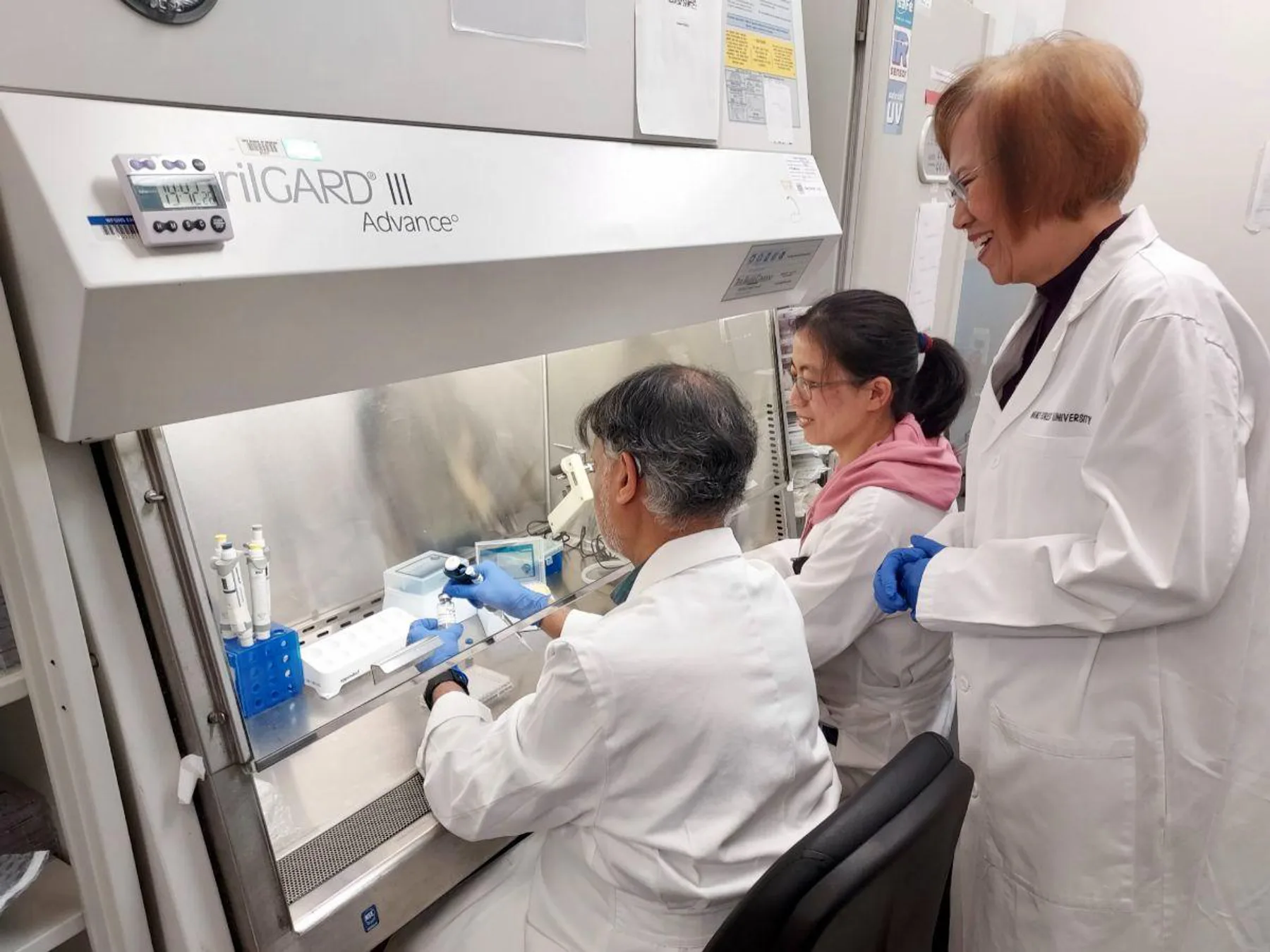
That’s why the NSF Engines are focusing on translation at scale, pushing new technologies out of the lab and into the market, where they can make an impact on everyday life. Researchers were paired with industry and startups, and coalitions were formed to build testbeds, pilot facilities, prototypes, startup accelerators, and translation pipelines.
In 2025, NSF Engines nationwide supported the testing, validation, and scaling of 100+ technologies, from cryogenic hardware to methane detection to carbon-negative cement.
Some of the most compelling examples:
Across the nine ecosystems, more than 100 deep-tech solutions have advanced along the readiness spectrum, with multiple engines reporting average TRL jumps of 1–2 levels for their portfolios.
The story of technology jobs in the United States in the last few decades has been mostly limited to the traditional coastal tech hubs. By prioritizing workforce development, the NSF Engines have flipped the script, opening pathways for workers in underinvested communities across the country to learn new skills and take up high-wage jobs in critical industries.
As technologies evolve rapidly, the workforce needs to evolve with them. This year, more than 40 new workforce development programs were launched across their regions of service, spanning K–12 pathways, community college curricula, apprenticeships, and industry-led credentialing — training or upskilling thousands for jobs in water, energy, semiconductors, ag tech, and more.
In Florida, the Semiconductor Engine helped launch the state’s first-ever associate’s degree in semiconductor engineering technology and is retraining former hospitality workers into high-wage roles that pay two to three times their previous income.
In North Carolina, home to two NSF Engines, the Textile Innovation Engine partnered with the NC Department of Public Instruction to reach 2,500–5,000 high school students per semester with a new advanced textiles curriculum, while the Regenerative Medicine Engine has exposed 5,000+ students to regenerative medicine careers. And in Louisiana, ExxonMobil is expanding the STEM Energy Professional Development program to rural school districts in Southwest Louisiana.
The story repeats from the Great Lakes to the Rocky Mountains, where ReNEW launched water-utility career programs across six states, and the ASCEND Engine placed 175 interns and engaged 440 students through climate and sensing programs in Colorado and Wyoming.
In every story, the through-line is the same: NSF Engines are as much about people as they are about technology. Together, these engines built new career pathways attuned to local needs and ready to support a new American manufacturing base across sectors critical to national security and economic competitiveness.
The most powerful innovations this year were not devices, materials, or prototypes — they were the partnerships capable of stewarding them. While the technologies themselves are worth celebrating, the most valuable, enduring product of the NSF Engines is the networks of public and private partners — universities, industry leaders, startups, investors, and policymakers — aligned on the mission of advancing American innovation.
Each NSF Engine operates under a unique set of circumstances, and there’s no one-size fits all playbook. But when partnerships meet community benefit, they form the foundation for long-term regional transformation: centering local voices, honoring cultural contexts, and ensuring that economic gains stay rooted in the regions that generate them.
The Future Use of Energy in Louisiana (FUEL) Engine, for example, has assembled 50+ partners, including Shell, ExxonMobil, and Baker Hughes, to make the state’s industrial corridor a proving ground for recycling carbon emissions into new products like liquid fuels, chemicals and polymers. Through a series of quarterly community engagement meetings targeted for service members, faith leaders and industry workers, stakeholders stay informed on trends in the energy sector and support available for small businesses.
In the North Carolina Regenerative Medicine Engine, the coalition has grown to include 150 industry, academic, research and community organizations that represent the nation's key players in biotechnology and regenerative medicine. These stakeholders have contributed over $266 million in new financial and in-kind resources to support breakthrough technologies transforming how we approach tissue repair, disease treatment, and organ replacement.
Meanwhile in Colorado and Wyoming, ASCEND partnered with Microsoft and NVIDIA to launch a Digital Twins Accelerator, giving startups access to ultra-high-resolution models and testbeds for natural hazard prediction and planning. NVIDIA is also among over 150 companies and organizations in the partner roster for the Futures Engine in the Southwest, connecting leaders in water and power infrastructure and emerging tech with policymakers, educators and investors to bolster growth and opportunity in the region.
As engines matured, ecosystem builders stepped into the demanding, often invisible work of holding cross-sector partnerships together. In this context, The Builder Platform’s role as a strategic convener, translator, amplifier, and support system for ecosystem builders has never been more important. By building infrastructure, relationships, and lasting frameworks for collaboration, these ecosystems can stand on their own long after NSF funding winds down.
The lesson of 2025 is unmistakable: when the public sector invests with discipline and partners with regions prepared to lead, American innovation delivers.
In just one year, the NSF Engines transformed a $135 million federal investment into more than $1 billion in matching commitments, accelerated critical technologies toward market readiness, and trained a new workforce in regions essential to the nation’s economic and national security. These are measurable outcomes — evidence that a place-based, results-driven approach to innovation works.
Equally important, the engines are building systems designed to last. By anchoring advanced technologies in regional strengths and aligning research, commercialization, workforce, and industry, they are strengthening domestic supply chains, reducing risk, and ensuring that American breakthroughs remain rooted in the United States.
At The Builder Platform, we are committed to continue standing alongside these regions, supporting the leaders doing the hard work of coordination, governance, and execution. We will keep providing the tools, connections, and lessons learned to help these ecosystems mature, sustain momentum, and succeed long after initial federal funding.
As global competition intensifies, the question is not whether the United States can lead, but whether it can do so broadly and durably. In 2025, the NSF Engines demonstrated that it can. The task ahead is to build on what works and ensure this proven model continues to deliver for the nation.